
ART- Accelerated Resolution Therapy
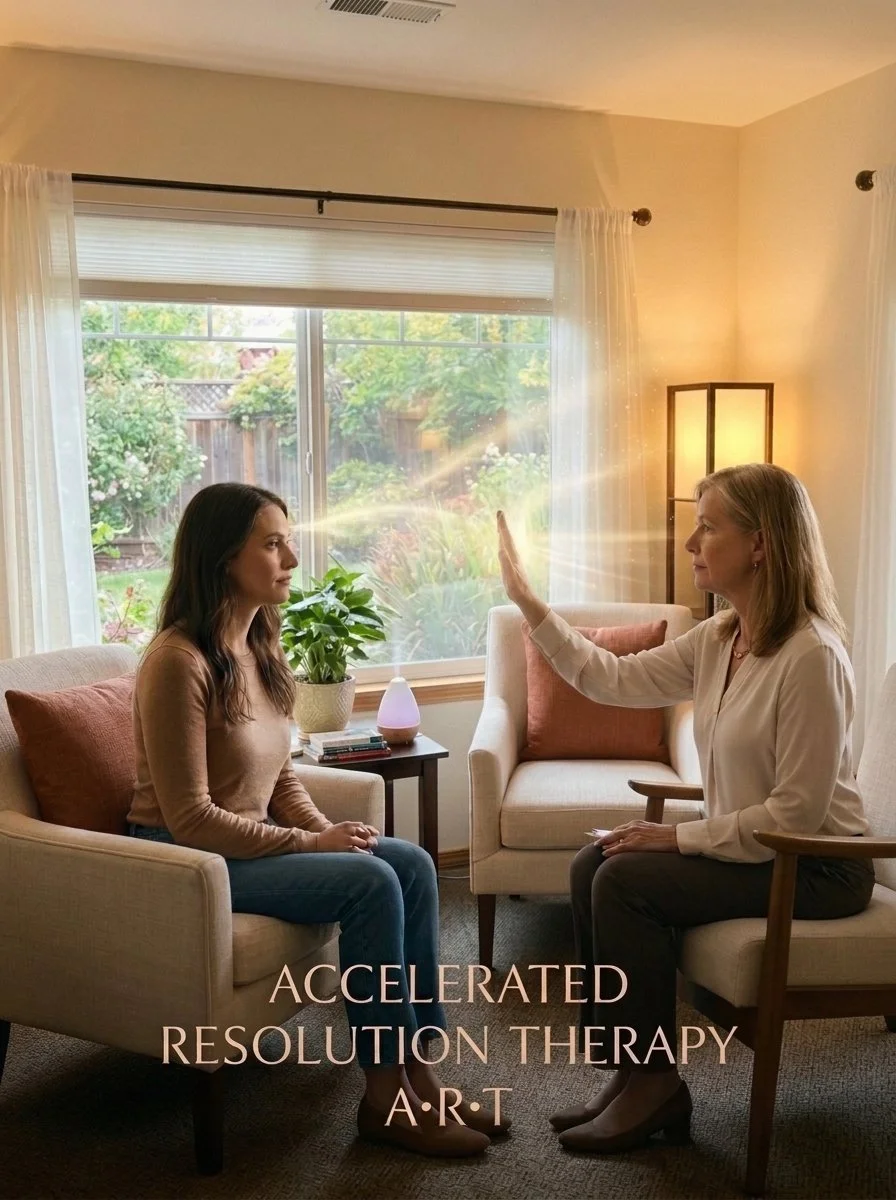

Accelerated Resolution Therapy (ART) is an innovative, evidence-based psychotherapy designed to deliver rapid, lasting relief from emotional distress and somatic trauma. Originally developed by Laney Rosenzweig, LMFT, in 2008, ART synthesizes elements from established therapeutic modalities—including Eye Movement Desensitization and Reprocessing (EMDR), Gestalt therapy, Cognitive Behavioral Therapy (CBT), and guided imagery—into a highly structured, protocol-driven intervention.
Unlike traditional talk therapies that may take months or years to yield results, ART typically achieves clinical resolution in as few as 1 to 5 sessions. It allows clients to reprocess distressing memories and reset their physiological stress response without requiring them to verbally detail their trauma, significantly minimizing the risk of re-traumatization.
Theoretical Foundations and Neurobiological Mechanisms
ART operates at the intersection of neuroscience, cognitive psychology, and somatic therapy. Its rapid efficacy is driven by several core psychological theories and neurobiological processes:
1. Memory Reconsolidation and Neuroplasticity
When a traumatic or distressing memory is recalled, it enters a temporary, malleable state—a process known as memory reactivation. During this window, the brain’s neural circuits can re-code the memory before saving it back into long-term storage. ART leverages memory reconsolidation through Voluntary Image Replacement (VIR). Clients are guided to replace distressing visual imagery with neutral or positive images of their choosing. The factual memory of what happened remains intact, but the overwhelming emotional charge and physiological distress attached to the memory are permanently neutralized.
2. Dual-Attention Stimulation and Amygdala De-escalation
ART utilizes sets of smooth, lateral eye movements (bilateral stimulation) while the client holds the traumatic event in mind. This dual-attention task taxes working memory, reducing the emotional vividness of the image. Biologically, lateral eye movements stimulate the parasympathetic nervous system, signaling safety to the amygdala—the brain’s threat-detection center. As autonomic arousal decreases, the prefrontal cortex can resume higher-order processing, allowing the brain to integrate the memory calmly and logically.
3. Gestalt Therapy and Metaphorical Processing
ART heavily incorporates Gestalt principles, which focus on present-moment awareness and the integration of mind and body. Clients are encouraged to tune into somatic sensations (such as tightness in the chest or knotting in the stomach) and use guided imagery or metaphors to complete "unfinished business." By working with the client’s internal symbolic language, ART helps bridge the gap between emotional experience and bodily sensation.
4. Cognitive Reframing and Somatic Regulation
Grounded in Cognitive Behavioral Therapy and Polyvagal Theory, ART addresses the automatic physiological responses triggered by stress. By shifting the body out of a chronic sympathetic response ("fight-or-flight") or hypoarousal ("freeze") state into a regulated ventral vagal state, clients develop an immediate sense of bodily control, self-efficacy, and safety.
Key Distinctions of ART
Minimal Verbal Disclosure: Clients are not required to speak aloud about the details of their traumatic experiences. Processing occurs primarily through internal visualization and somatic tracking, making it an ideal treatment for individuals who find talking about their trauma overwhelming or re-traumatizing.
Client-Directed Autonomy: Clients maintain total control over the pace, depth, and creative solutions utilized during the Voluntary Image Replacement process.
Rapid Somatic Relief: Physical symptoms of distress—such as racing heart rate, muscle tension, or nausea associated with painful memories—are systematically identified and dissolved within the session.
Clinical Indications and Conditions Treated
Due to its versatility in clearing stored neurobiological distress, ART is effective across a broad spectrum of psychological, relational, and physiological challenges:
Trauma and Stress-Related Disorders: Post-Traumatic Stress Disorder (PTSD), complex/developmental trauma, victimization, sexual abuse, combat trauma, and job-related burnout.
Anxiety and Mood Conditions: Generalized anxiety, panic attacks, obsessive-compulsive disorder (OCD), phobias, persistent depressive symptoms, and grief or complicated loss.
Relational and Systemic Challenges: Family dynamics, relationship distress, infidelity, codependency, and unresolved attachment wounds.
Self-Concept and Behavioral Issues: Poor self-image, performance anxiety, addiction/substance use triggers, and maladaptive coping habits.
Somatic and Physical Health Applications: Somatic pain management, chronic stress symptoms, and memory enhancement or performance optimization.
Accelerated Resolution Therapy
Check out these powerful videos about ART:
Accelerated Resolution Therapy (ART) is a brief, evidence-based psychotherapy designed to rapidly reduce symptoms of trauma, anxiety, depression, and other distressing memories or images.
Accelerated Resolution Therapy (ART) is a brief, evidence-based psychotherapy designed to rapidly reduce symptoms of trauma, anxiety, depression, and other distressing memories or images.